
CEO UPDATE
This month marks the release of several important national resources, including the Animal Health in Australia Annual Report and System Report, the inaugural National Biosecurity Strategy Annual Report, and the updated Australian Animal Welfare Standards and Guidelines for Goats.
Together, these publications highlight important progress across surveillance, preparedness, welfare and system coordination.
I also want to acknowledge a significant animal welfare milestone in the egg industry, with Australia’s largest hatchery, Specialised Breeders Australia, introducing in‑ovo sexing technology for the first time.
This advancement allows the sex of a chick to be identified early in incubation, reducing the need to cull day‑old male chicks. It reflects strong industry leadership, investment, and a continued commitment to science‑based innovation and evolving community expectations.
For details, see the Egg Farmers of Australia media release.
Consultation on national biosecurity reforms is also underway, providing an opportunity to review how Australia’s biosecurity system responds to evolving risks and to help shape future priorities and arrangements. See more below.
Red meat levy reviews
Across the red meat sector, peak industry bodies are progressing several levy reviews. In some cases, levies have remained unchanged for many years, so it is sensible to ensure they remain fit for purpose.
The biosecurity activity levy enables investments in biosecurity, emergency response and preparedness activities through AHA. These investments achieve outcomes that no single industry could manage alone.
For more than 30 years, AHA has played a critical role in supporting national biosecurity arrangements, bringing government and industry together, coordinating national programmes, and supporting member commitments under emergency animal disease agreements.
Beyond outputs, AHA’s connections, experience and technical expertise are also central to maintaining a strong and effective biosecurity system. As risks continue to rise and demand for biosecurity services grows, these functions are more important than ever.
AHA will be supporting the review process as needed and remains committed to delivering practical, trusted outcomes for all levy payers.
Upcoming AHA General Meeting
The next AHA General Meeting will be held virtually on 23 June 2026. A key agenda item is the endorsement of the 2025–26 Annual Operating Plan, which sets budgets and program priorities for the year ahead. Members are encouraged to attend and contribute to AHA’s future direction.
Regards
Dr Samantha Allan
MEMBER UPDATE
The Animal Health in Australia Annual Report 2025 and System Report (Second Edition) are out now
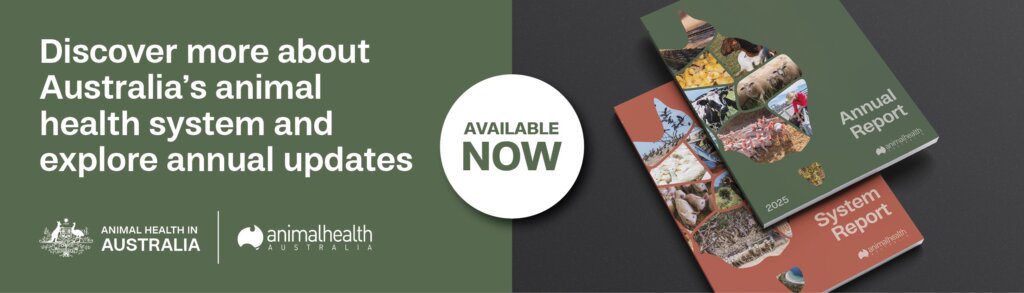
Together, the reports provide a clear picture of Australia’s animal health outcomes in 2025 and how the national animal health system supports surveillance, preparedness and response.
The Annual Report highlights key achievements, disease investigations, surveillance activities, and updates to policies, programs and national plans during 2025.
The System Report explains how Australia’s animal health system works, including governance, biosecurity, surveillance, laboratories, emergency preparedness, animal welfare and One Health arrangements.
Australian Animal Welfare Standards and Guidelines for Goats
The Goat Industry Council of Australia (GICA) has released the 2026 version of the Australian Animal Welfare Standards and Guidelines for Goats, following a comprehensive industry review.
The updated document includes clearer advice across goat husbandry practices and introduces a new dedicated chapter for fibre goats.
The review was delivered in partnership with AHA and involved veterinary experts, industry leaders and experienced producers across all goat enterprises.
This collaborative approach has helped ensure the standards and guidelines are practical and relevant across different enterprise types.
Australian Biosecurity Awards – nominations now open
Nominations for the 2026 Australian Biosecurity Awards are now open. The awards recognise individuals, groups and organisations that strengthen Australia’s biosecurity system through leadership, collaboration, innovation and proactive risk management.
Animal Health Australia and Plant Health Australia sponsor the Producer of the Year category. Members are encouraged to nominate producers who are demonstrating leadership and best practice in on‑farm biosecurity.
Nominations close at 5pm (AEST) on Tuesday 16 June 2026.
EAD training update
Final month to complete online courses in BOLT and download training records
AHA is transitioning its online training from Biosecurity Online Training (BOLT) to a new learning management system, Acorn.
BOLT users can continue to access courses and download training records until 30 June 2026. From 1 July 2026, training records will no longer be available (except for selected EAD courses), and online learning resources will be accessed through Acorn.
For support, email trainingsupport@animalhealthaustralia.com.au.
Upcoming Liaison – Livestock Industry (LLI) training dates
Registrations are now open for the LLI Workshop in Fremantle (WA) on Wednesday 22 July 2026. Peak Industry Bodies are encouraged to nominate new LLI candidates or existing representatives who would benefit from a refresher training.
To nominate, contact trainingsupport@animalhealthaustralia.com.au.
Registrations close Friday 12 June.
Upcoming LLI Workshop schedule:
- Vic LLI – Monday 1 March 2027 (date TBC)
- WA LLI – Wednesday 22 July 2026
- NSW LLI – Wednesday 28 October 2026 (date TBC)
EADRA update
Updated guidance
The revised EADRA Guidance document: Role of industry personnel in an EAD response has been published on the AHA website.
EADRA Working Groups
The Categorisation Review Working Group met on 30 April 2026 to review the draft Terms of Reference and membership for an Emergency Animal Disease Categorisation Panel. Once finalised, it will be shared with all Parties for broader consultation.
The Normal Commitments Working Group will meet on 21 May 2026 to consider legal advice on proposed amendments to Schedule 6.3.
Overview information on the EADRA
The EADRA team has developed induction material that may be helpful for new staff joining signatory organisations. It provides an overview of the EADRA and outlines what staff can expect to be involved in when engaging with the EADRA program.
If you would like to receive a copy, email eadra@animalhealthaustralia.com.au.
AUSVETPLAN update
AUSVETPLAN 2026-27 work plan
Following approval by our members, the 2026-27 AUSVETPLAN work plan has been finalised, with preparations for delivery commencing in June.
AUSVETPLAN documents
The writing group for the AUSVETPLAN Response strategy: Surra is close to finalising their review of the manual following a major revision. The following AUSVETPLAN documents are currently at various stages of the approvals process:
- AUSVETPLAN Response strategy: Peste des petits ruminants
- AUSVETPLAN Response strategy: Sheep and goat pox
- AUSVETPLAN Response strategy: Bluetongue.
National biosecurity reform – have your say
Australia’s biosecurity is under increasing pressure. In response, Agriculture Ministers have asked the National Biosecurity Committee to develop and consult on proposed national biosecurity reforms.
The proposed reforms built on progress already underway through the National Biosecurity Strategy and have been informed by ongoing discussions with industry, producers, research bodies, community groups, First Nations representatives and governments.
Members are encouraged to review the discussion paper and provide feedback through the online survey or by lodging a written submission.
Submissions close at 5pm (AEST) on 12 June 2026.
Resource of the month
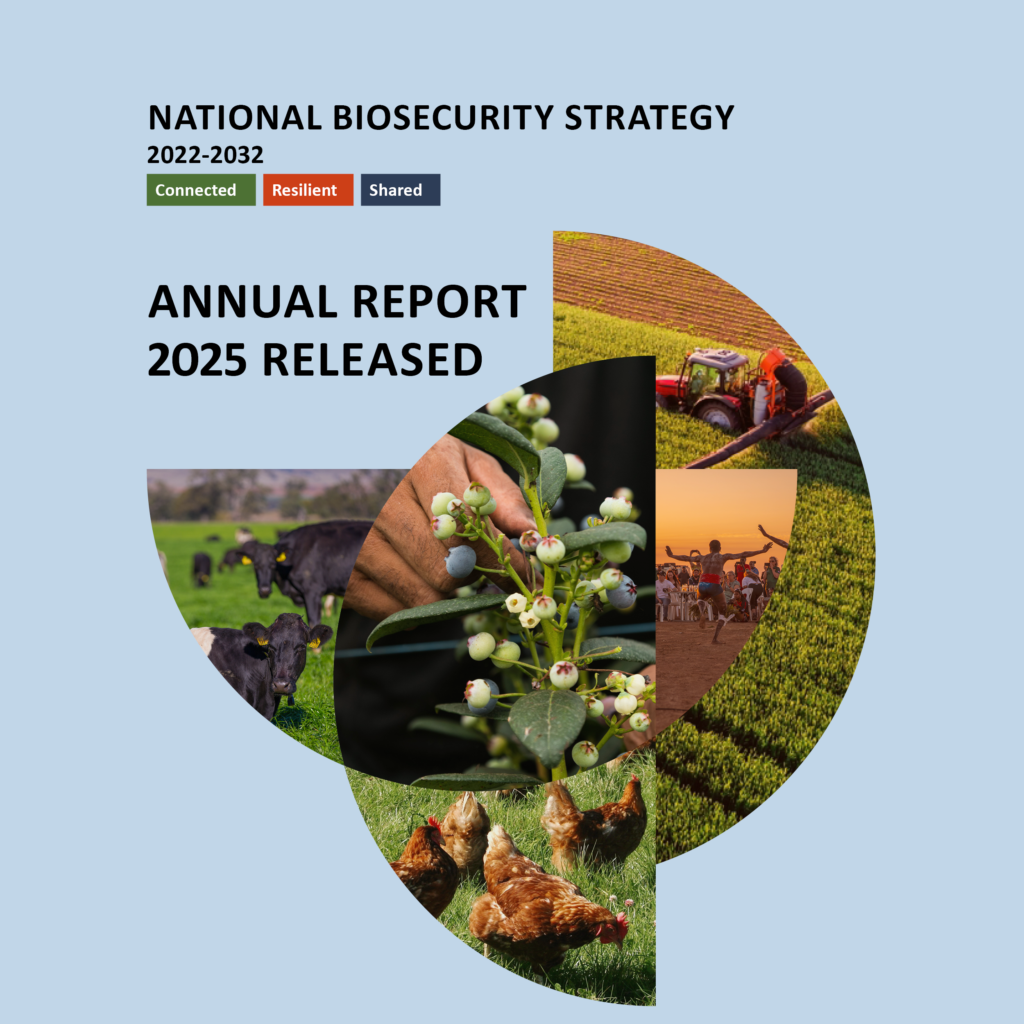
National Biosecurity Strategy Annual Report
This inaugural report outlines key initiatives helping to protect Australia’s agriculture and environment from pests and diseases, including building workforce capability through training programs and strengthening partnerships with First Nations through initiatives such as the Indigenous Ranger Biosecurity Program.
Upcoming AHA events
Member Engagement Week
59 Cameron Ave, Belconnen ACT 2617