
CEO UPDATE

As 2025 draws to a close, I want to thank all our members and partners for your continued commitment to strengthening Australia’s animal health and biosecurity systems. It’s been a big year of progress and collaboration — from advancing preparedness initiatives to shaping our Strategic Plan 2025–30. Your expertise and engagement have been vital in navigating challenges and driving results.
Our office will close COB 24 December 2025 and reopen on 5 January 2026. We wish you a safe and joyful holiday season and look forward to working with you in the new year.
AHA’s 30-year milestone fast approaching
Next year marks 30 years of biosecurity leadership for AHA. Over three decades, we’ve worked with members to protect Australia’s livestock industries and safeguard our national biosecurity system. Stay tuned in the new year as we share reflections on this journey and celebrate the partnerships that made it possible.
H5 avian influenza in the news
Recently, H5 avian influenza was confirmed in elephant seals on Heard Island, a remote Australian sub-Antarctic territory located more than 4,000 km south-west of Perth and 1,700 km north of Antarctica in the Southern Ocean.
There have also been new detections of H5N1 in dairy cattle in Wisconsin, US. Wisconsin is now the 18th US state to detect H5N1 in dairy cattle since March 2024.
We’re also aware of recent media coverage about H5 risks to key livestock industries. This follows the release of an independent risk assessment commissioned by the Australian Government’s HPAI Preparedness Taskforce and Dairy Australia.
Completed in September 2025, the risk assessment provides guidance on preparedness and response measures for industry and government and includes rapid risk appraisals for other livestock sectors.
The report estimated the risk of H5 HPAI to be low for Australian dairy and pigs and negligible for beef cattle and small ruminants (sheep and goats).
Department of Agriculture, Fisheries and Forestry (DAFF) and Dairy Australia hosted a webinar on 4 December 2025 to present these findings. A recording of the webinar will be available soon.
In the meantime, there is a factsheet and several reports available on the DAFF website.
Thanks for a great year
Thanks again for your dedication and support throughout 2025. Together, we’ve achieved significant milestones, and I’m confident that 2026 will bring even greater opportunities to advance animal health and biosecurity in Australia.
Regards
Dr Samantha Allan
MEMBER UPDATE
Registrations open for March MEW 2026

The year is winding up, but registrations are already open for our first Member Engagement Week (MEW) in 2026. Once again, we invite all members to join us at the Vibe Hotel in Canberra on 2-5 March 2026 to connect, share insights, and collaborate on key issues shaping our sector.
AHA Member Charter Review – have your say
We’re updating our Member Charter to align with our Strategic Plan 2025–30 and want your feedback. Tell us what’s working, what could improve, and how the Charter can better support collaboration and accountability. Please share your feedback by 1 February 2026.
Emergency Animal Disease Response Agreement (EADRA)
EADRA Variations and Amendments Workshop
On 19 November, a virtual workshop was held to review and seek in-principle endorsement of the 2025 proposed amendments and variations to the EADRA. Most changes were endorsed, with some requiring further work before they can be progressed. Once finalised, all Signatories will receive papers for formal signing early in the new year.
EADRA Working Group on Normal Commitments
The EADRA Working Group on Normal Commitments met on 13 November for the final time in 2025 to continue work on the principles and definition of Normal Commitments, and review text in relevant clauses and schedules of the EADRA.
Wrapping up 2025
Recipients of the monthly EADRA Workplan Status Reports are advised that no report will be distributed in December. Instead, a combined update covering both December and January will be shared early in the new year.
We sincerely appreciate the commitment and collaboration shown by members throughout 2025, and we look forward to continuing our work together in the year ahead. Wishing everyone a safe, relaxing, and joyful holiday season.
Training update
New LLI Network Maintenance Guidelines – out now
AHA has launched the Liaison – Livestock Industry (LLI) Network Maintenance Guidelines to help peak industry bodies strengthen collaboration during emergency animal disease responses.
The guidelines include practical tools like checklists, templates, and links to AUSVETPLAN resources to support LLI networks before and during deployment.
Preparedness – your support needed
The AHA Training Team is reviewing joint training obligations under the EADRA to ensure members remain ready to respond to an EAD. We need your help with two key actions:
1) Meet with the training team – share feedback about how you currently use Liaison – Livestock Industry (LLI) resources, identify any gaps in your EAD lists, and help us tailor support for 2026 and beyond.
2) Review and update your EAD contacts lists – industry signatories to the EADRA should have received an email with their current EAD contact lists and instructions for review. Keeping these details accurate is critical for rapid activation during an EAD incident. Send amended list or reach out for assistance to trainingsupport@animalhealthaustralia.com.au
National Management Group (NMG) training
The next NMG training exercise will run on Wednesday 4 – Thursday 5 March, during MEW. Please assess your current NMG representation and discuss the need for any updated representation.
Our workshops use scenario-based discussions to help members prepare for EAD incidents and provide a collaborative space to network and learn.
Registrations open early to mid-January 2026. For more information, email trainingsupport@animalhealthaustralia.com.au
IGAB Review Implementation Plan released
On 28 November, DAFF published the Implementation Plan for recommendations arising from the 2024 independent review of the Intergovernmental Agreement on Biosecurity (IGAB). The plan outlines how recommendations will be delivered to strengthen Australia’s biosecurity system through improved governance, collaboration, and transparency.
The National Biosecurity Committee (NBC) will lead the implementation, working with industry, biosecurity stakeholders and the wider community. The work is expected to be completed by the end of 2026.
The review Final Report and Implementation Plan are available on the DAFF website.
Resource of the month
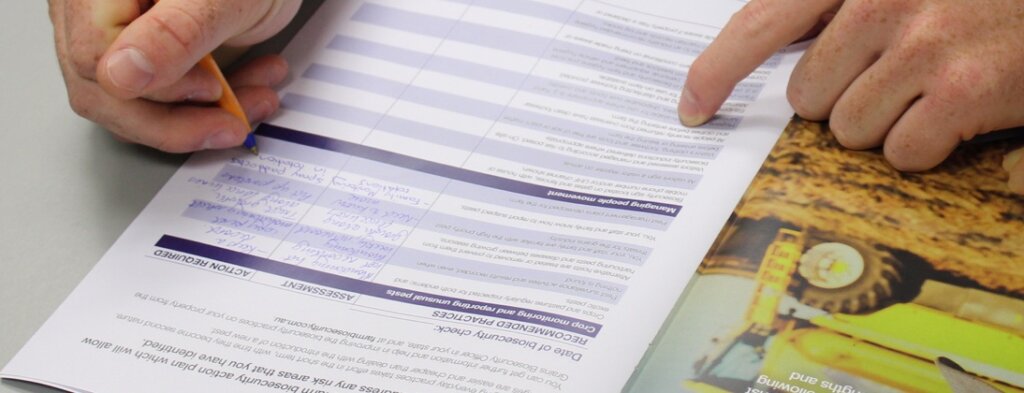
Farm Biosecurity Action Planner
Help your members take the next step in protecting their farms. The Farm Biosecurity Action Planner is a practical tool designed to help producers assess biosecurity risks on their property and plan actions to address them.
Upcoming AHA events
Member Engagement Week
Canberra Airport ACT, Australia
National Management Group (NMG) Training Exercise
Canberra Airport ACT, Australia