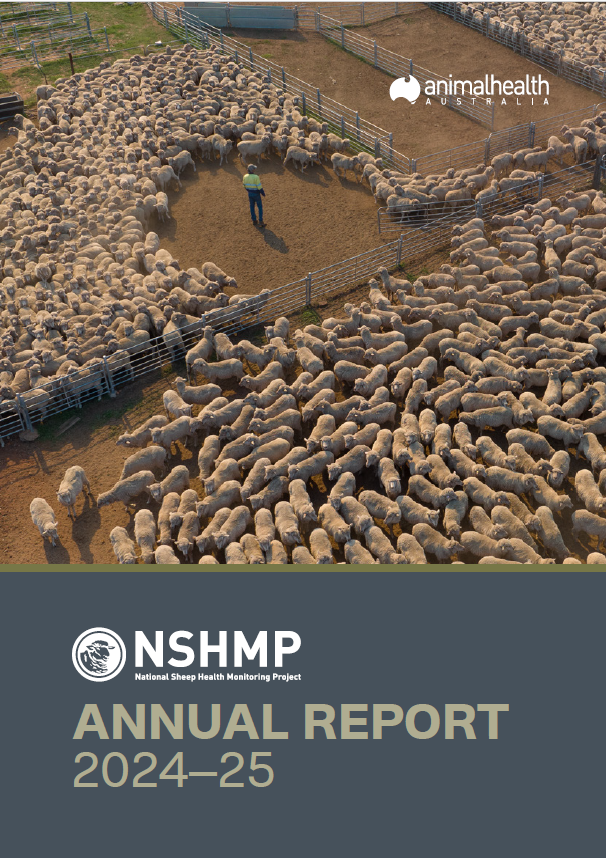
Animal Health Australia has released the National Sheep Health Monitoring Project (NSHMP) Annual Report 2024–25, presenting surveillance insights from 9,815,482 sheep inspections conducted across 10 abattoirs nationally.
These findings continue to inform evidence‑based monitoring of endemic conditions that affect animal health, productivity and processing efficiency.
Key findings from 2024–25
The 2024–25 dataset shows that bladder worm (2.8%) and nephritis (2.3%) were the most frequently recorded conditions nationally. Nephritis prevalence increased compared with 2023–24, while lungworm prevalence decreased from 1.2% to 0.5% in inspected sheep.
State-level patterns include:
- Queensland: nephritis at 6.8%, with knotty gut remaining regionally relevant.
- South Australia: elevated levels of lungworm (4.3%) and sheep measles (2.4%).
- Victoria: pleurisy and vaccination lesions each at 5.7%, the highest reported nationally.
- Western Australia: sheep measles detected on 78% of PICs.
- Tasmania: notable levels of liver fluke (1.8%) and sheep measles (2.2%).
Total inspections were lower than in 2023–24 due to technical disruptions at two abattoirs, with remediation planned for 2025–26 to restore full data flow.
Why these results matter for industry
The NSHMP provides high‑resolution national surveillance of sheep conditions that affect productivity, welfare and processing outcomes. The dataset supports:
- assessment of surveillance system performance
- improvements in processing efficiency by identifying conditions linked to trimming and condemnation
- prioritisation of extension and on‑farm management activities
- strengthening of national traceability and market assurance – particularly with the continued rollout of electronic identification (eID).
Producers can also access consignment‑specific disease, defect and carcass data through Meat and Livestock Australia’s myFeedback platform, enabling PIC‑level benchmarking and more targeted management decisions.
About the NSHMP
The NSHMP collects data on 20 sheep health conditions through routine inspection of carcasses and viscera by certified meat inspectors, with the presence of pathology recorded at participating abattoirs. The data is securely stored in the Endemic Disease Information System (EDIS), hosted by AHA.
The project aims to:
- monitor conditions that reduce productivity or affect market access,
- provide timely and accurate animal health information,
- support producer feedback through state departments and MLA’s myFeedback system, and
- contribute to a cost‑effective, national post‑mortem surveillance system that reduces wastage and improves value chain efficiency.
Since 2023–24, state-level analyses have been based on direct (vendor‑consigned) lines only to ensure animals can be reliably linked to their PIC of origin. Future reporting is anticipated to improve further with the national expansion of eID from 2025.
For more information about the program, visit the National Sheep Health Monitoring Project page.