Latest emergency response news
Updated: 16 July 2026
There are no active responses for foot-and-mouth disease in Australia. Australia remains free from FMD.
FMD has been endemic in Indonesia since May 2022. While case numbers have stabilised significantly from its first outbreak, the disease continues to circulate and represents an ongoing biosecurity risk to Australia. An active vaccination program and surveillance activities are in place across Indonesia.
About foot-and-mouth disease
Foot-and-mouth disease (FMD) is a highly contagious viral disease that affects all cloven-hoofed animals. This includes cattle, water buffalo, sheep, goats, pigs, deer, camels, llamas and alpacas.
FMD does not affect horses, dogs, or cats and does not pose a significant health risk to people. However, it is one of the most economically devastating livestock diseases in the world.
There are seven serotypes of FMD virus: O, A, C, SAT1, SAT2, SAT3 and Asia 1. Immunity to one serotype does protect against others, which is important when selecting vaccines during a response. The serotype O is the most widespread globally.
FMD spreads mainly through:
- direct contact between infected and susceptible animals
- inhalation of virus, which can travel on the wind under suitable atmospheric conditions
- contaminated feed, water, soil, vehicles, equipment, clothing and footwear
- contaminated fresh, chilled or frozen meat, meat products and dairy products
- movement of infected animals or animal products, including meat, dairy products, bones and untreated hides
Common signs of FMD in cloven-hoofed animals include:
- fever and lethargy
- drooling and reluctance to eat
- blisters (vesicles) on the tongue, lips, gums, dental pad, nostrils, snout and between or above the hooves
- ruptured blisters exposing raw, painful tissue
- lameness and reluctance to move
- drop in milk production in dairy animals
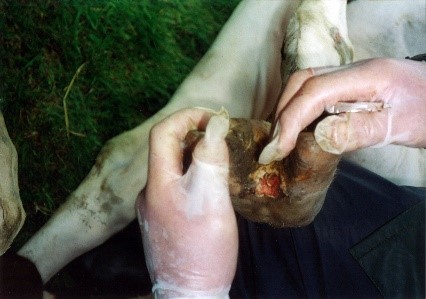
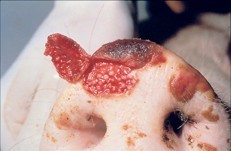
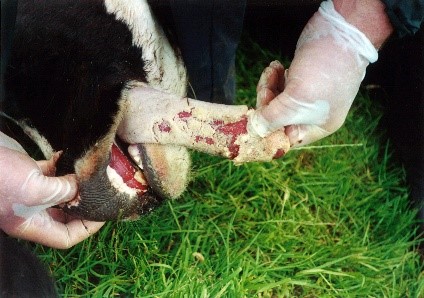
Clinical signs alone are not enough to confirm FMD. Laboratory testing is required.
The incubation period is typically 2 – 14 days. Morbidity may approach 100%. Mortality in general is low in adult animals (1–5%) but higher in young calves, lambs and piglets (20% or higher).
FMD is not a food safety concern. It cannot be transmitted to people by consuming meat, milk or dairy products. FMD should not be confused with hand, foot and mouth disease, which is a common human illness caused by another virus.
Foot-and-mouth disease in Australia
Australia has been free from FMD for more than 150 years. The last confirmed incident occurred in Victoria in 1872, following the importation of an infected bull from England.
Australia is recognised by the World Organisation for Animal Health (WOAH) as FMD free without vaccination, a status that underpins access to key export markets for livestock and animal products.
FMD is one of Australia’s most serious biosecurity threats. A large, multi-state outbreak would have major consequences for animal health, trade and economy. Modelling by ABARES indicates that such an outbreak could cost Australia’s livestock industries up to $80 billion over ten years.
If FMD were detected in Australia, likely impacts would include:
- an immediate national livestock standstill to prevent further spread
- suspension of livestock and livestock product exports to countries that require FMD‑free certification
- significant production losses due to disease impacts, movement controls and disruption to supply chains
- significant costs to manage the outbreak, shared between governments and industry under the Emergency Animal Disease Response Agreement (EADRA)
- complex control challenges involving susceptible feral and wild animals, particularly in northern Australia
Australia’s nationally agreed policy is to eradicate FMD as quickly as possible, while minimising social, economic, animal welfare and environmental impacts.
Australia maintains strong preparedness arrangements to remain FMD-free. Key measures include:
- a nationally agreed AUSVETPLAN FMD Response Strategy
- access to an offshore FMD vaccine bank
- well‑rehearsed arrangements for a national livestock standstill
- targeted surveillance in northern Australia through the Northern Australia Quarantine Strategy (NAQS)
- strict border biosecurity controls and enforcement of prohibited pig feed legislation
- ongoing regional engagement to reduce FMD risk in neighbouring countries

How to report foot-and-mouth disease
Foot-and-mouth disease is a nationally notifiable animal disease. If you suspect foot and mouth disease in any cloven-hoofed animal, report it immediately by contacting:
- your private veterinarian
- your state or territory agriculture department
- the Emergency Animal Disease Hotline on 1800 675 888.
Do not wait for a diagnosis before reporting. Early reporting is critical for a rapid and effective response.
Producers should be especially alert for signs such as blisters on the mouth or feet, excessive drooling, sudden lameness, fever or a drop in milk production.
Foot-and-mouth disease overseas
FMD is endemic in many parts of the world, including Africa, the Middle East, Asia and parts of South America. Different virus serotypes circulate in different regions, causing ongoing losses to livestock industries and posing a continual risk to FMD-free countries such as Australia.
In May 2022, FMD was detected in Indonesia for the first time since 1986. Although case numbers fell sharply after the initial outbreak, the disease is now considered endemic in Indonesia, with vaccination, surveillance and movement controls continuing. The presence of FMD so close to Australia remains a significant biosecurity concern.
Outbreaks of FMD are reported to the World Organisation for Animal Health (WOAH) by member organisations and publicly available on the World Animal Health Information System.
Resources for producers
Foot‑and‑mouth disease can cause severe production losses and long‑term trade disruption. Strong on‑farm biosecurity, knowing the signs of disease, and early reporting are the most effective ways to protect your animals and your business.
AUSVETPLAN resources
AUSVETPLAN is a series of manuals, guides and procedures containing the nationally agreed approach for responding to emergency animal disease incidents. The following documents are relevant to an FMD response.