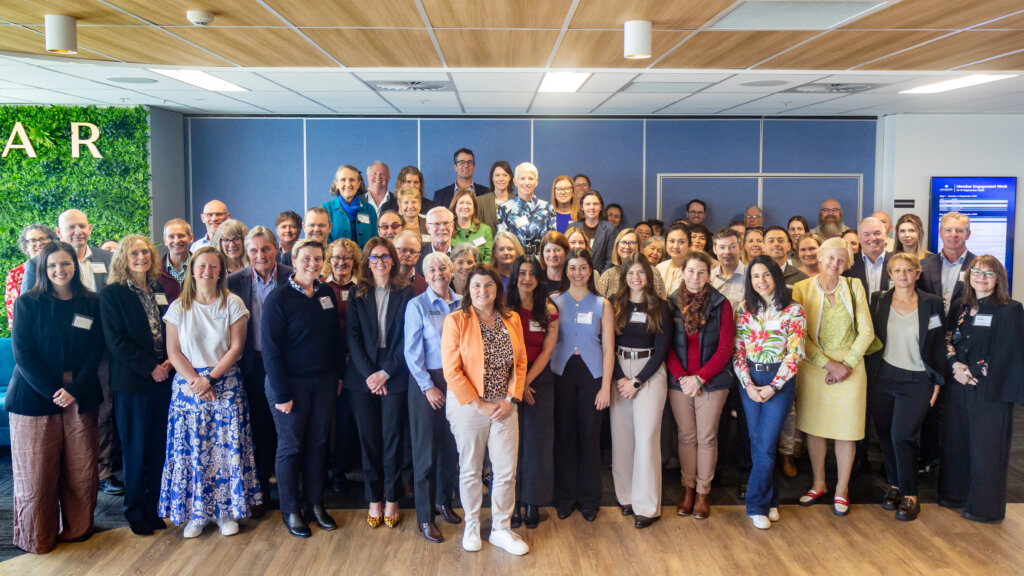
A strong biosecurity system is often judged by what people see — disease response plans, surveillance programs, emergency exercises and technical expertise.
Yet its real strength lies in the network of relationships that enables the system to adapt, evolve and respond to new challenges.

For 30 years, Animal Health Australia (AHA) has been at the heart of Australia’s animal biosecurity system, bringing together governments, livestock industries, veterinarians, researchers and biosecurity experts to tackle challenges no single organisation could solve alone.
While each stakeholder brings a unique perspective, responsibilities, and priorities, they all share a common goal: to keep Australia’s animals healthy and its biosecurity system strong.
Today, it’s easy to take this collaboration for granted. But Australia’s animal health system did not emerge fully formed. It has been built over decades through shared challenges, hard-won lessons and a growing recognition that no single organisation could tackle national animal health issues alone.
The lesson that changed everything
AHA’s foundations were built long before the organisation existed.
During the 1960s and 1970s, governments worked together to combat some of Australia’s most significant cattle diseases, including bovine pleuropneumonia, brucellosis and tuberculosis.
These programs achieved important outcomes, but they also revealed a principle that would shape Australia’s animal health system for decades to come: lasting progress needs governments and industry working together.
By the 1980s, the Brucellosis and Tuberculosis Eradication Campaign (BTEC) was putting that principle into practice. The national program, which began in 1970, ultimately led to Australia achieving freedom from bovine brucellosis in 1989 and bovine tuberculosis in 1997.
A significant milestone came in 1988, when the cattle industry agreed to co-fund the campaign, reflecting its growing role in national animal health programs.
The success of BTEC helped pave the way for a more formal partnership model.
In 1996, governments and industry established the Australian Animal Health Council, later known as Animal Health Australia, to coordinate efforts on animal health issues of national significance.
Thirty years later, the idea behind AHA remains as important as ever.
Building connections before they are needed
When people think of biosecurity, they often picture disease outbreaks, response teams and emergency operations centres. In reality, the most important biosecurity work happens long before threats emerge.
For three decades, AHA has brought governments, industries and technical experts together through a unique partnership model that has helped strengthen Australia’s animal health system and build the preparedness and resilience needed to respond to evolving animal health challenges.
This work happens through committees, working groups, planning processes, training programs and preparedness exercises that rarely attract public attention. Yet they form the backbone of Australia’s biosecurity capability.
Over time, the partnership model has supported nationally significant initiatives, including AUSVETPLAN, national surveillance programs, livestock traceability systems and preparedness activities that strengthen Australia’s ability to prevent, detect and respond to animal disease threats.
One of the most significant milestones was the signing of the Emergency Animal Disease Response Agreement (EADRA) in 2002, which established a nationally agreed framework for governments and industry to jointly prepare for and respond to emergency animal disease outbreaks.
Today, AHA facilitates more than 50 national programs spanning animal health, welfare, biosecurity, market access and emergency preparedness.
The programs themselves matter. But their lasting value lies in something less tangible: the relationships, trust and shared understanding built along the way.
When challenges arise, it’s these connections that help ensure the system responds as one.
When the system is tested
The value of collaboration becomes clearest when the system comes under pressure.
Over the past three decades, Australia has faced a range of animal health challenges.
The 2007 equine influenza outbreak remains one of the most significant. More than 47,000 horses on almost 6,000 properties were infected, and the national eradication effort ultimately cost an estimated $571 million.
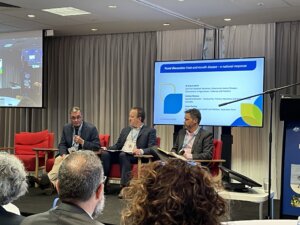
More recently, expanding global distributions of diseases such as African swine fever, foot-and-mouth disease and H5N1 avian influenza have reinforced the need for coordinated national action.
The potential economic impact of a foot-and-mouth disease outbreak alone has been estimated in the billions.
These risks highlight an important reality: effective disease preparedness and response depend on more than technical expertise and well-developed plans. They depend on governments, industries and technical experts being able to work together quickly and effectively.
In many ways, the true test of a biosecurity system is not what happens during a crisis — it’s what happens before it ever occurs.
The next chapter
The world has changed dramatically since AHA was established in 1996.
Global trade and travel have increased. Production systems have evolved. New technologies are transforming how information is collected, analysed and shared. At the same time, emerging diseases, shifting environmental conditions and changing community expectations continue to reshape Australia’s biosecurity landscape.
What remains constant is the need for collaboration.
As AHA marks its 30th anniversary, the milestone is about more than the longevity of an organisation. It is a reminder of what can be achieved when diverse stakeholders work together toward a shared goal.
As new challenges emerge, those partnerships will be more important than ever. Thirty years on, collaboration remains Australia’s greatest biosecurity asset.